The storm has passed. Let us handle what it left behind.
Storm & Hurricane Tree Cleanup in Palm Beach County
Trees on the roof, limbs across the driveway, a yard buried in debris: Tree Maid clears hurricane and storm damage from homes, HOAs and businesses across Palm Beach County. Our experienced arborists make the property safe first, then cut, lift and haul it all away.
Licensed and insured, serving the county since 2005. We give you a firm written quote at your property, plus dated photos for your insurance adjuster. Call or text and tell us what you are looking at.
Heavy Rain Aftermath: Fallen Limbs and Weakened Trees in Palm Beach County
Updated November 2026
Palm Beach County just had record rainfall in early November 2026, with more than a foot reported in parts of the county, and forecasters expect a wetter than normal dry season. If limbs are down, a tree is leaning, or debris is piled up, our experienced arborists clear it safely and haul it away. We photograph the damage for your insurance claim.
Fallen branches and debris
Hanging limbs, split trunks and storm debris cut up, removed and hauled off your property.
Leaning or uprooted trees
Wet ground can loosen roots. We make the tree safe first, then remove it if it cannot be saved.
Insurance photos
Before and after photos and a written scope to support your claim.
Call for a free assessment: (561) 246-3326
Rainfall and outlook details: WLRN, WPTV, UF/IFAS Extension.
What Our Storm Cleanup Crews Handle
After a hurricane, the order of work matters as much as the cutting. We make the site safe, restore access, remove the wood, and leave you with records your insurer can use.
Fallen Trees on Roofs and Structures
We take weight off roofs, fences, sheds and pool cages in controlled sections, working from the top down so the damage does not spread.
Debris Removal and Haul-Away
Trunks, limbs, fronds and leaf litter go onto our trucks. Where a county pickup program is running we can stage material for it, but you never have to wait on one.
Hanging Limbs and Unstable Trees
The wood still overhead is often the most dangerous. We clear broken limbs and flag leaning or root-heaved trees before anyone works beneath them.
Documentation for Your Claim
We photograph damage as we find it and as we leave it, with a written scope of work, so your adjuster sees the full picture.
Testimonials
D Ramsland
“Very professionally done! Came well equipped to get the job done. Will use again!“– (Via Google Review)
“Storm came through and knocked a tree on to my car. And when I say jose and his team saved me. He saved me. Within 20 minutes his team arrived and within a hour they had the tree off the car with no additional damage. Contact them ASAP. No tree is too small and dam sure no tree is too big!!!” – (via Google review)

Call Us Now!
561-246-3326
What Tree Damage Cleanup Actually Covers
The Whole Debris Field, Not Just the Tree
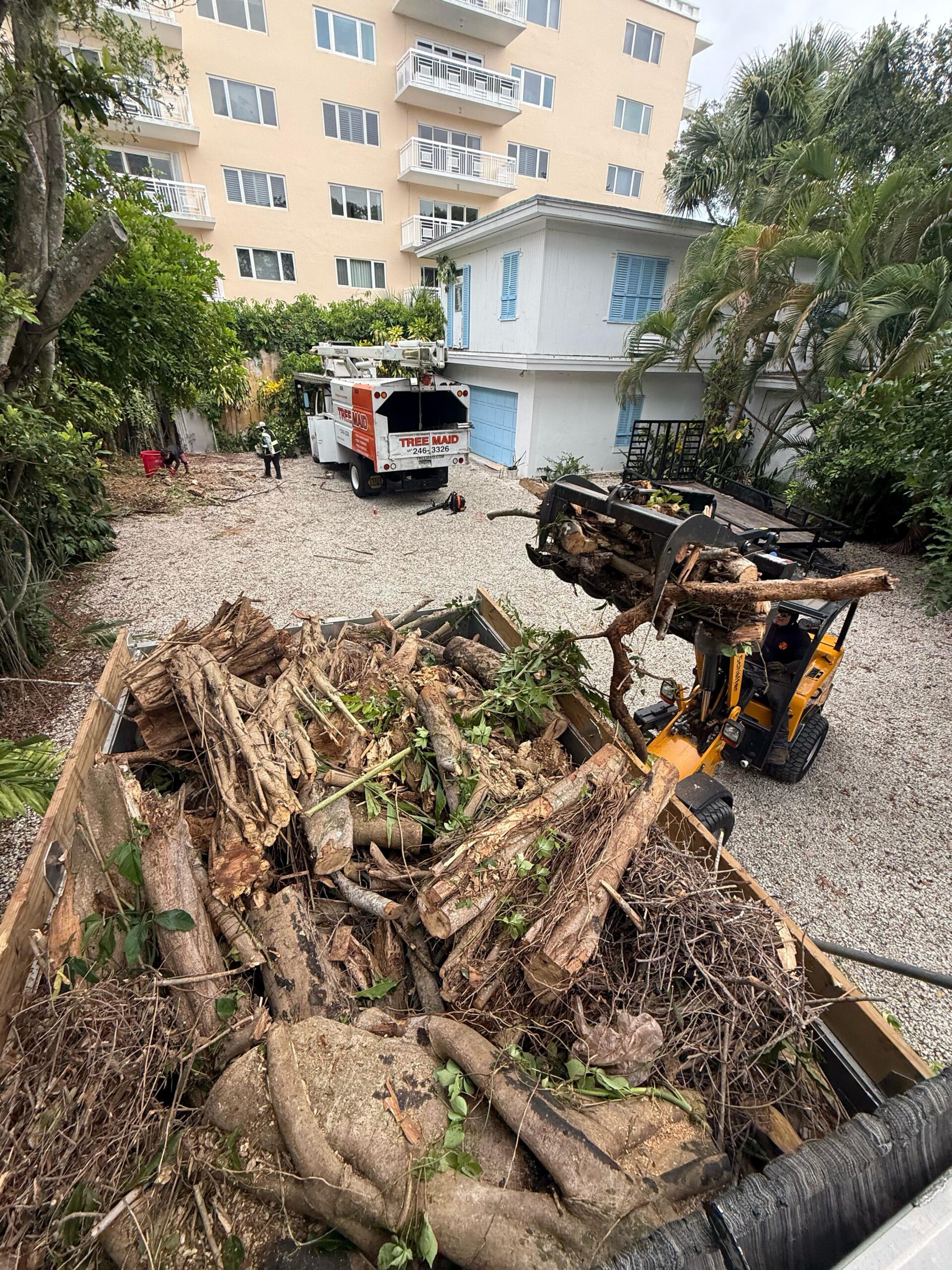
A storm rarely drops one clean trunk. It leaves split limbs across the lawn, fronds on the roof, branches in the pool cage and a scatter of smaller wood through the beds. We clear the whole field, not only the obvious piece.
Hangers and Half-Broken Limbs
The dangerous wood is usually still in the canopy — cracked limbs hung up and waiting to drop. Our arborists bring those down under control before anyone walks underneath, which is the part a general clean-up crew leaves behind.
Hauled Away, Not Piled at the Kerb
Everything leaves on our truck the same visit. You are not left with a pile by the road waiting on a municipal pickup that may be weeks out after a county-wide storm.
The First 48 Hours After a Storm
Safety Triage Comes First
On arrival we walk the property and rank what is actually dangerous — leaning trunks, cracked crotches, limbs over a roof or driveway. Those come down first. Cosmetic clearing waits until nothing overhead can hurt anyone.
Power Lines Are Not Ours to Touch
If a limb is resting on a service line, that is FPL, not us. We will tell you plainly, help you report it, and work the rest of the property around the exclusion zone rather than pretending we can clear it.
Why Waiting Costs More
Wood left in contact with a roof, screen or fence keeps doing damage every time the wind gets up. Split trunks also dry and become harder and more dangerous to cut. Clearing early is usually the cheaper decision.
Documentation Your Insurer Will Ask For
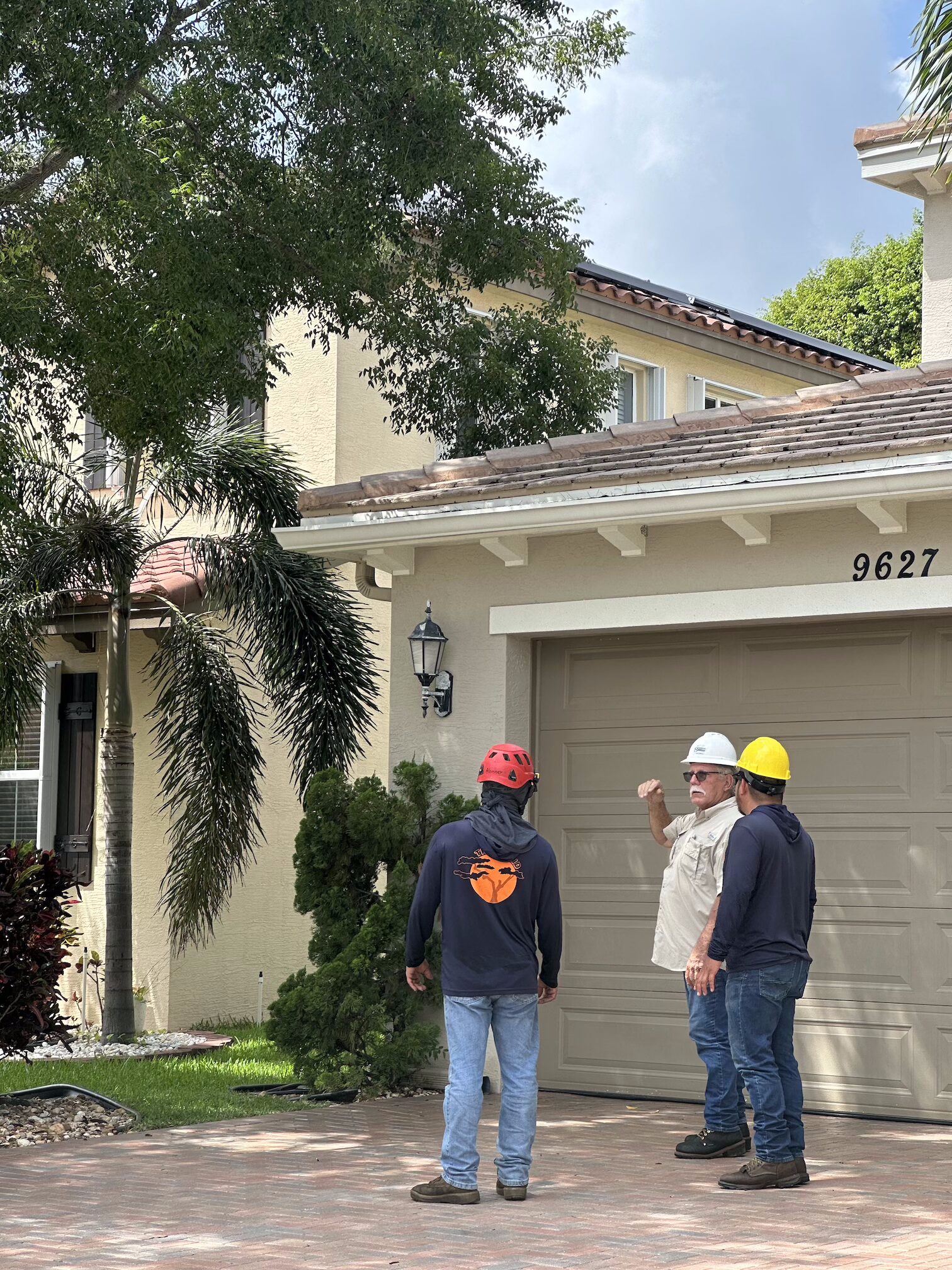
Photographed Before We Cut
We photograph the damage as found — the tree, the point of failure and what it landed on — before any saw starts. Once the wood is gone that evidence cannot be recreated, and adjusters routinely ask for it.
A Written Scope, Not a Verbal Figure
You get the work and the price in writing. That is the document an insurer or property manager needs, and it is what protects you if the claim is questioned later.
What We Cannot Do
We are arborists, not adjusters. We will not tell you what your policy covers or what your claim is worth. We give you accurate records of the tree work and leave the claim to you and your insurer.
How a Storm Cleanup Job Runs, Start to Finish
Every property is different, but the sequence is the same: look first, secure what is dangerous, remove the wood, then check what is left standing.
Step 1:
Walk the Property
We tour the whole lot with you, photograph each fallen tree and hanging limb, and note anything resting on a structure or leaning toward one.
Step 2:
Make It Safe
Hanging limbs and trees under tension come down first. Power lines are left to FPL, and we work around them once the utility has cleared them.
Step 3:
Cut, Clear and Haul
Fallen trees are sectioned and removed, brush is gathered, and everything is loaded out so you are not left with piles to deal with.
Step 4:
Check What Survived
Standing trees get a look for cracked unions, lifted roots and torn crowns, so you know what is sound and what needs attention.
Step 5:
Final Sweep and Records
We rake and sweep the work area and give you dated photos and a written summary for your insurance file.
Storm Tree Services: Who We Clear For After a Storm
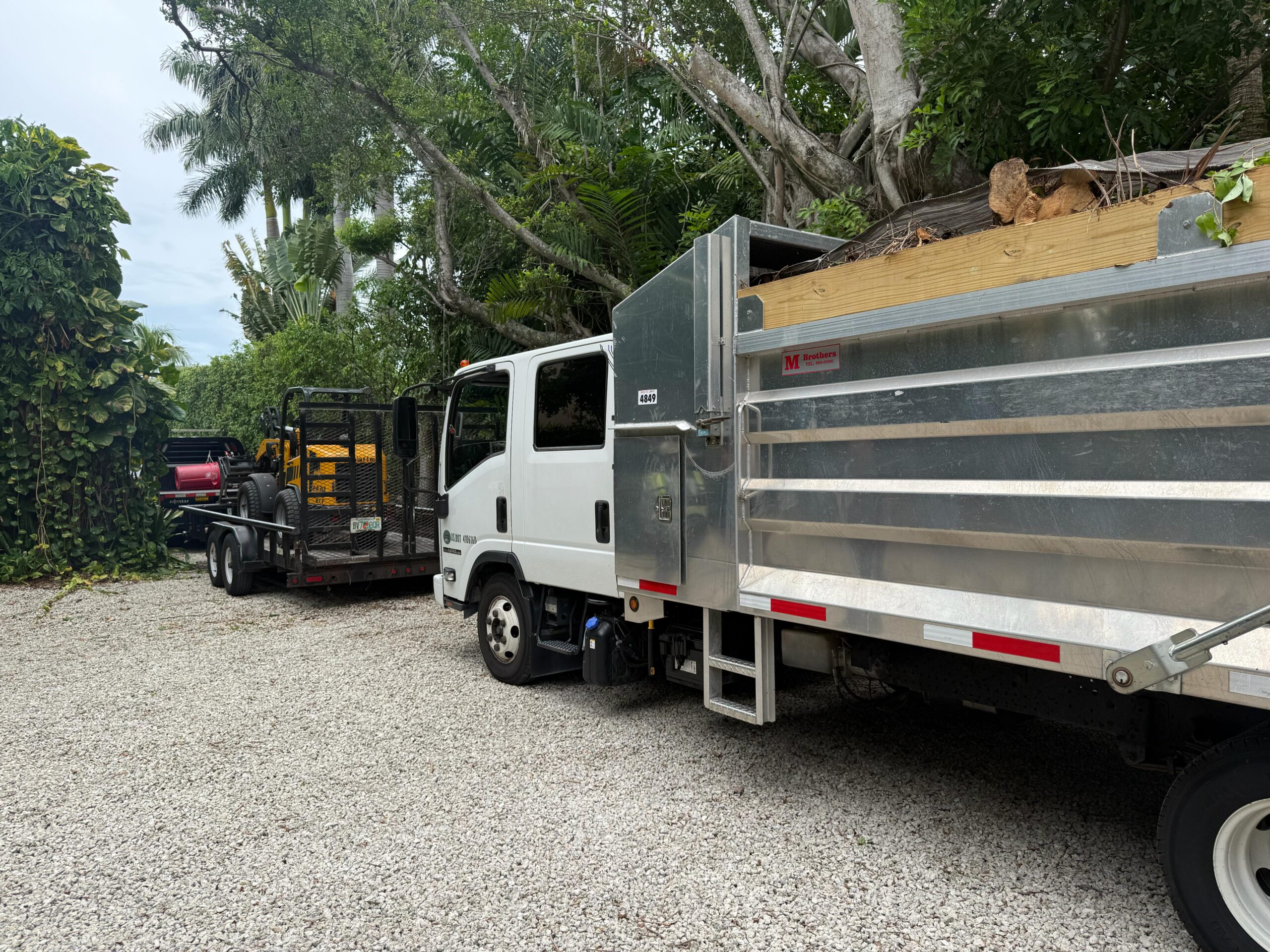
Homeowners
One tree down, a fence crushed, a driveway blocked. We clear it, haul it and leave the property usable — usually in a single visit.
Property Owners and Landlords
Multiple addresses, tenants calling, and a need for records. We work through a list by priority, send written scopes per property, and keep the paperwork straight for your files.
HOAs and Commercial Sites
Common areas, entry roads, car parks and walkways where access has to reopen fast and liability matters. We coordinate with boards and managers and document the whole job.
Call Us Now!
561-246-3326
Hurricane Cleanup Near You
Pick your city for neighborhood-specific notes on how we handle debris, access and haul-away.
Ficus-lined streets, tight lots and Intracoastal waterfront.
Home-base crews minutes from River Bridge and Jog Road.
Canal-side homes and shallow-rooted Australian pines.
From Atlantic Avenue to gated West Delray.
Estates, golf communities and landscaping we protect.
Historic districts, big oaks and tight access.
Equestrian properties, long gated drives and estates.
Mature subdivisions and busy corridors.
Golf, preserve and waterway communities.
Hypoluxo Island, downtown and the beach area.
Marinas, canals and Lost Tree Village.
Singer Island, the port district and Broadway.
A tree comes down mid-storm? We answer any hour.
Get ahead of the next storm with wind-load pruning and hazard checks.
Get Your FREE Storm Damage Evaluation!
Schedule now—it’s quick and easy!
Not sure if that leaning tree is a hazard or a survivor? Get a free, in-person storm damage assessment from our crew — we’ll tell you honestly what’s dangerous, what can be saved, and what it takes to make your property safe again.
Storm & Hurricane Cleanup — Frequently Asked Questions
The most common storm cleanup questions we get from Palm Beach County homeowners and businesses after a hurricane or severe storm. Have one not listed? Contact us, as we would be glad to help.
How fast can you get to my property after a storm?
Active hazards — a tree on a structure, vehicle, or blocking your driveway — get priority, often same-day. After a major hurricane, demand across Palm Beach County spikes, so we triage: make-safe work first, full cleanup second. Because we’re based in Lake Worth Beach and not dispatched from another county, we’re on local roads the moment they’re passable. Call (561) 246-3326 and tell us exactly what happened — we’ll tell you honestly where you are in the queue.
How much does storm cleanup cost in Palm Beach County?
It depends on what fell and where it landed. Clearing downed limbs and yard debris might run a few hundred dollars; removing a large tree off a structure with rigging can run $1,500–$7,000+. Storm work costs more than scheduled work because of urgency, hazardous conditions, and rigging around damage. We give you a written price before we start — and document everything for your insurance claim.
Will my homeowners insurance cover storm tree damage and cleanup?
Often yes — when a tree damages a covered structure, policies commonly pay for removing it from the structure plus the repairs. Trees down in the yard without property damage are usually not covered. We photograph everything before touching it and provide itemized documentation your adjuster can work from. After big storms, beware of out-of-state crews demanding cash — hire local, licensed, and insured.
Do I need a permit to remove a storm-damaged tree?
For genuine storm hazards, Palm Beach County municipalities allow immediate hazard abatement — the paperwork, where needed, follows the work. A destroyed or dangerously damaged tree does not have to stay on your roof while a permit processes. We know each city’s process and handle it as part of the job.
A tree is on my roof right now — what do I do first?
Keep everyone out of the rooms under the damage, and don’t climb up to inspect. If power lines are involved, call FPL first and stay clear. Then photograph the damage from the ground for insurance and call us at (561) 246-3326 — we prioritize trees on structures, stabilize what’s unstable, and tarp-ready the area for the roofer.
Do you haul the debris away, or does it go to the curb for county pickup?
We haul it — everything. County storm-debris pickup can take weeks after a major hurricane and has rules about how debris must be staged at the curb. Our standard storm cleanup removes all logs, limbs, and brush from your property the same visit, so you’re not living with a debris pile while the county works through its backlog.
Can a leaning or partially uprooted tree be saved after a storm?
Sometimes, yes — and it’s worth asking before assuming it’s a loss. Palms in particular tolerate leaning and even partial uprooting far better than hardwoods; many can be stood back up, staked, and saved if addressed within days. A split or snapped hardwood usually can’t be saved. We’ll give you an honest assessment on-site: what’s savable, what’s a hazard, and what it costs either way.
Is it safe to cut up a fallen tree myself with a chainsaw?
Storm-damaged trees are the most dangerous chainsaw work there is — trunks and limbs under load can spring, roll, or snap in directions that aren’t predictable without training. Chainsaw injuries spike after every Florida hurricane. Small clear limbs on open ground, fine. Anything under tension, on a structure, or overhead — call us. It is not worth the emergency room visit.
Should I wait for my insurance adjuster before cleanup starts?
No — document first, then make safe. Photograph and video the damage thoroughly from safe positions, then let us remove the immediate hazard; insurers expect reasonable steps to prevent further damage, and waiting days with a tree on your roof can make things worse. We provide before/during/after photos and itemized documentation your adjuster can use, so cleanup and your claim work together.
Experienced Arborists, Not Just a Crew With a Saw
Anyone can take a tree down. Knowing whether it needs to come down at all is the part that saves you money — and that is where our tree experts earn their keep. Every job starts with a proper look at the tree: species, structure, root condition, lean, decay, and what is underneath it.
What our tree professionals check before quoting
- Species and growth habit. A Live Oak, a Royal Palm and a Ficus each fail differently and need different cuts.
- Structural defects. Included bark, co-dominant stems, cavities and deadwood — the things that decide whether a tree survives the next storm.
- Root and soil condition. Sandy Palm Beach County soil, high water table and salt exposure all affect anchorage.
- Targets underneath. Roof, pool cage, driveway, fence, power lines — this drives both method and price.
- Pruning to standard. We prune to ANSI A300 practice: no lion-tailing, no hat-racking, no topping. Bad cuts create the hazard you were trying to remove.
Why it matters for storm cleanup
We are a single-fleet team — the same crew that assesses your tree does the work. Nothing gets subcontracted, nothing gets lost between a salesperson and a saw. And because we trim, remove, grind and replant, we can tell you honestly when a trim will solve the problem instead of a removal. If you want that judgement before committing, book a tree health and risk assessment.
Licensed, fully insured and Google Guaranteed, serving Palm Beach County since 2005. Talk to a tree expert on (561) 246-3326 or request a free on-site quote.
Before We Arrive: What To Do In The First Hour
If a tree is already down, the minutes before our crew reaches you matter. Our 24/7 emergency tree service covers the safety steps, what not to touch, how to document damage for your insurer, and what your policy will usually cover in Palm Beach County.
If it is happening now, skip the reading and call (561) 246-3326.